Warzone, 30-kill tactical PS5 Pro run and what it teaches about the meta
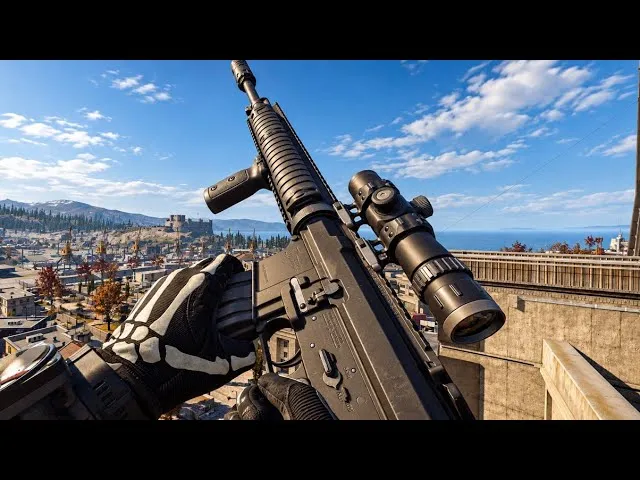
Video: CALL OF DUTY: WARZONE 30 KILL TACTICAL PS5 PRO GAMEPLAY! (NO COMMENTARY)
Want articles like this for your own video to promote it on YouTube and Google? Order them through the Telegram bot @sat_sit_bot. It writes articles around your video, embeds the video and publishes them on popular niche websites (no ads). Free trial — 50 articles.
· based on the channel NoAnnoyingCommentary
Key takeaways
- The NoAnnoyingCommentary upload showcases a 30-kill tactical Warzone match captured on PS5 Pro hardware, with no commentary track.
- The run is a solo-style tactical performance rather than a full-squad comms game: rotations, holds, and endgame reads carry the kill count.
- PS5 Pro matters for frame stability: Warzone's 120 Hz mode holds steadier in the mid-game and final circles than base consoles.
- Verdansk remains the most-requested battleground in the community, and the video's description tags it alongside Season 6 and Black Ops 7 Warzone.
- Viewer comments focus on head-to-head confidence, ghost-style play, and curiosity about Battlefield's competing rapid-royale mode.
Warzone is Call of Duty's free-to-play battle royale, and the fastest way to improve at it is to study high-kill tactical runs rather than highlight reels. A 30-kill match is not luck: it is a sequence of loadout choices, map rotations, and endgame decisions that stack kills on top of each other. The NoAnnoyingCommentary upload of a 30-kill tactical PS5 Pro gameplay session is a clean example of that structure, stripped of commentary so the decisions are visible on their own.
What a 30-kill tactical Warzone match actually looks like
A tactical kill count is built from positioning, not from chasing fights. In a typical 30-kill Warzone run, the player is not sprinting at every sound; they are holding a power position, letting enemies walk into sightlines, and resetting only when the gas or a third party forces a move. That is the difference between a highlight montage and a tactical match: the kill total comes from surviving long enough to meet more opponents.
The pattern usually follows three phases. Early game is a controlled drop with a fast weapon pickup and immediate armor. Mid-game is where the count climbs, because rotations between named locations on Verdansk funnel players into predictable chokepoints. Late game is where most runs collapse: the final circles compress the map, and a player with 20 kills can still finish outside the top five if they misread the last two zones.
PS5 Pro hardware and why frame stability decides fights
Frame stability is a competitive advantage in Warzone, not a cosmetic feature. On PS5 Pro, Warzone's high-refresh mode holds closer to its target frame rate during the moments that matter most: the mid-game third-party fights and the final circle, where multiple squads and killstreaks are active at once. A drop from 120 Hz to a stuttering 90 Hz changes how a gunfight feels, and in a game with sub-second time-to-kill, that difference decides duels.
The practical takeaways for console players are simple:
- Enable the highest refresh mode your display supports, then verify your TV or monitor is actually running at that rate.
- Turn off motion blur and heavy post-processing; they cost frames and hide enemy silhouettes.
- Keep a wired connection to the router; packet loss hurts more than a 10 fps dip.
- Use a headset with clear positional audio so footsteps and reloads register before the enemy appears.
None of this replaces aim, but it removes the excuses. A 30-kill run on console hardware is proof that controller players are not locked out of high-kill lobbies.
Loadouts, movement, and the kills that pad the score
Loadout discipline is what separates a 30-kill run from a 12-kill run. The strongest Warzone classes pair one weapon for mid-range control with one for close-quarters emergencies, plus perks and equipment that support repositioning rather than camping. Lethal equipment matters more than most players admit: a well-placed frag or thermite forces enemies out of cover and into your sightline, which is where the kill actually happens.
Movement is the other half. Sliding into cover, breaking line of sight, and re-peeking from a different angle all inflate a kill count because they let one player fight several opponents sequentially instead of simultaneously. In a tactical match, the goal is never to win a 1v3 straight up; it is to turn a 1v3 into three separate 1v1s. That is the single most transferable lesson from a no-commentary gameplay video, because you can watch the repositioning without narration telling you what to think.
Reading the endgame: rotations, gas, and third parties
The endgame is where tactical players win or lose the match, regardless of their kill count. Three rules govern the final circles:
- Rotate early and take the ugly side of the zone. The clean side is where everyone else is already watching.
- Track the gas timer, not the kill feed. The gas kills more players than any weapon in the lobby.
- Assume a third party after every fight. Finish the down, break contact, and reset before the next squad arrives.
Loadout swaps also matter late. Dropping a long-range scope for a red-dot or swapping to a fast-handling SMG for the final circle is a common move among high-kill players, because the last zones are close-range by definition. A 30-kill match usually includes at least one late loadout adjustment like this; skipping it is how strong runs end in a top-10 finish instead of a win.
Verdansk, seasonal shifts, and the current Warzone map pool
Map knowledge is the quiet multiplier behind every high-kill Warzone match. Verdansk remains the battleground most associated with the classic Warzone experience, and its named locations create the rotation patterns that tactical players exploit: high ground near the stadium, the industrial corridors, and the open fields that punish anyone crossing without cover. The video's own tags reference Verdansk alongside Season 6 and Black Ops 7 Warzone, which reflects how the current content cycle keeps the classic map in rotation.
Beyond the map, the seasonal layer changes what works. Weapon tuning passes shift the meta every few weeks, so a loadout that dominated last season can feel sluggish after a patch. The reliable approach is to keep two or three classes leveled: one assault rifle for mid-range, one SMG for the final circle, and one sniper or marksman option for open-ground rotations. Players who rebuild their class only after a bad session are always one step behind.
Questions players ask after watching high-kill runs
High-kill gameplay videos generate the same handful of questions, and they are worth answering directly. Viewers often wonder whether a 30-kill match is achievable on a controller, whether ghost-style play is better than aggressive pushing, and whether competing battle royales deserve a try alongside Warzone.
The short answers: yes, controller players hit these numbers regularly, especially with aim assist tuned correctly; ghost-style play is stronger in tactical lobbies because it denies information and lets you choose fights; and trying a rival mode is fine, but Warzone's movement and gunplay remain distinct enough that skills do not transfer cleanly. The most common misunderstanding is that kill count equals skill. In reality, survival time creates kill opportunities, and the players with the highest totals are usually the ones who stayed alive longest.
Final thoughts on the 30-kill tactical run
This 30-kill tactical PS5 Pro match is a useful study piece because it shows Warzone as a decision game rather than a shooting gallery. The kill count is the output; the inputs are loadout discipline, rotation timing, hardware stability, and endgame patience. Console players should take encouragement from it: the gap between a good run and a great one is rarely raw aim, but the willingness to hold a position instead of chasing every sound. The NoAnnoyingCommentary channel publishes this kind of commentary-free gameplay regularly, which makes it a practical reference for players who want to watch decisions rather than listen to opinions. Watch it once for the kills, then watch it again for the rotations.
Questions & answers
Is a 30-kill Warzone match possible on a controller?
Yes. Controller players regularly reach 20 to 30 kills in Warzone, especially with aim assist configured properly and a loadout built around mid-range control. The bigger factor is survival time: staying alive longer simply creates more fights to win.
Is ghost-style, low-profile play better than aggressive pushing in Warzone?
In tactical lobbies, disciplined positioning usually outperforms constant pushing because it denies enemies information and lets you choose engagements. Aggressive play can work, but it depends on fast movement and reliable third-party awareness, which is harder to sustain across a full match.
How much does PS5 Pro hardware actually help in Warzone?
The main benefit is frame stability during crowded mid-game and final-circle moments, where base consoles can dip. A steady high-refresh mode makes gunfights feel more consistent, but it will not compensate for poor positioning or a bad loadout.
Should Warzone players try competing battle royale modes?
It can be useful for variety, but the skills do not transfer cleanly. Warzone's movement, time-to-kill, and loadout economy are distinct, so time spent in a rival mode is time not spent learning Verdansk rotations or the current weapon meta.
Source: CALL OF DUTY: WARZONE 30 KILL TACTICAL PS5 PRO GAMEPLAY! (NO COMMENTARY) · Markdown version